

There are few things more American than the desire to be first, to stand above all others and receive all that comes with being the original, the victor, the main attraction. This idea, whether we realize it or not, is one of the driving forces of American Identity. Because as Americans, nothing, and no one can matter more than we do. And even when something, or someone does become relevant, it is only because we have chosen to acknowledge it through our very American lens.
The stories we tell about our history, about each other, and about the world are painted through this perspective, and we have done it for so long that when someone pushes back against this reality, we can become defiant, sometimes even hostile. Because how on God’s green earth could anything ever exist, or any story be told without it centering us? And if such stories are told, why should they matter?
The ways in which we view ourselves and the world are so strong that many of us fail to realize just how skewed our perception of reality is, that what we think is the truth might be a variation of it, but not quite what is actually happening on the ground. That the story does not always have to center our identity. To not be mentioned does not always mean to be erased, it could just be someone else’s turn to play the main character. But America has always viewed itself as greater than everything and everyone else, so what happens when that supremacy begins to face real challenges? I have been thinking about this very American self centeredness a lot recently, especially after the Grammy Awards this past weekend.
The spectacle it presents yearly is also intimately American. Where else could you find a celebration of wealth, aesthetics, and artistry, during a time when so many have so little, and our president is spending his days sharting during press conferences, and erasing Black history? But who cares? The Grammys are on, and Kendrick Lamar just won his 25th award, the most of any rapper. I watched his victory speech on twitter while trying to ignore the reports of Ice targeting Haitians in Ohio. Thankfully, Kendrick’s victory wasn’t the only one that caught my attention.
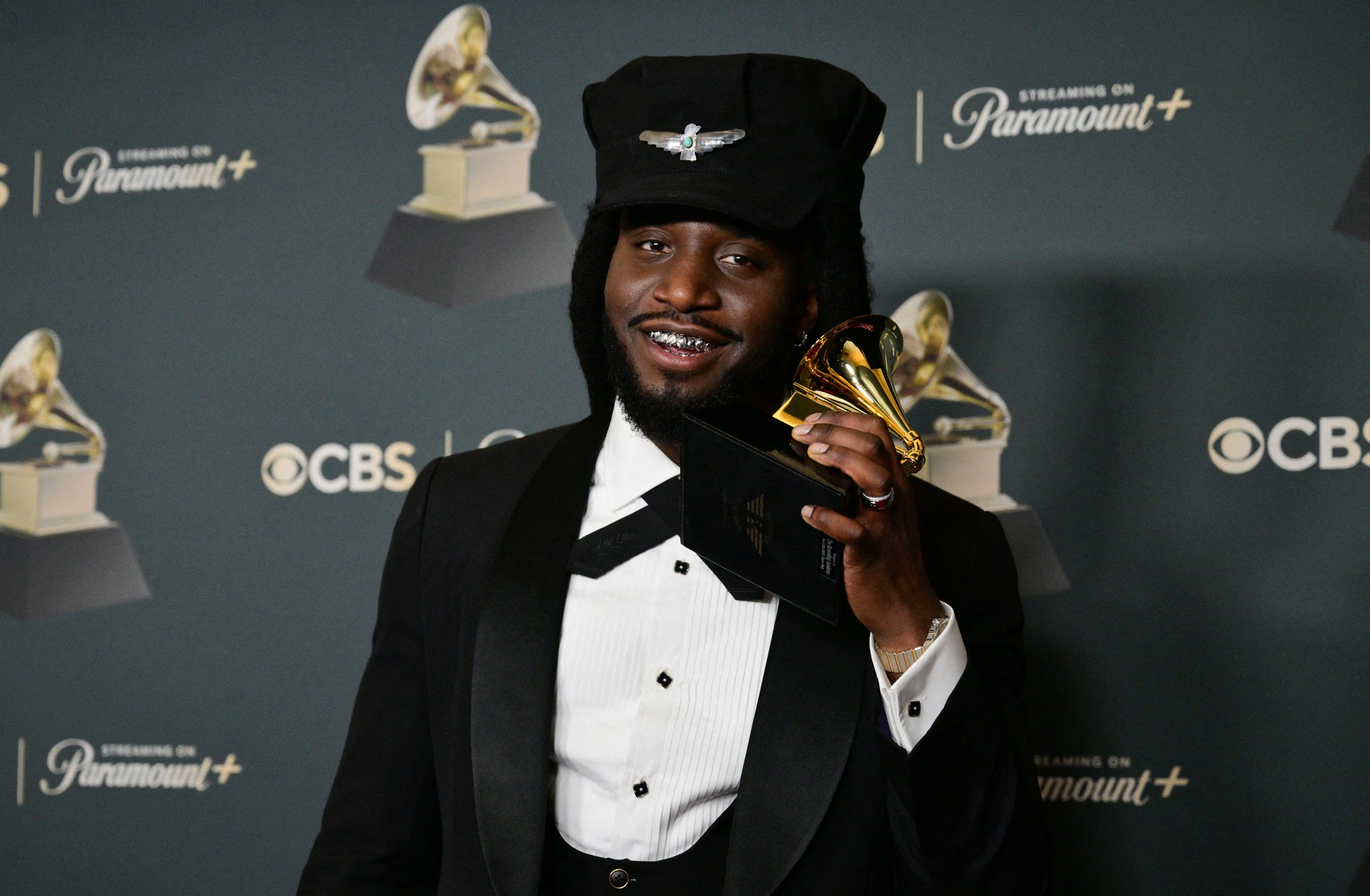
Earlier that evening, country singer, Shaboozey took home a Grammy for best country duo/group performance. While accepting this award, the first generation American thanked his immigrant mother for all she had done to raise him, and dedicated the award to “all children of immigrants” saying that “Immigrants built this country. Literally.” Shaboozey’s remarks were met with a warm response at the event, but on social media, things weren’t as warm. On Threads and Twitter, some Black users, and many many chat bots created for the sole purpose of stirring up online outrage responded to his statement by saying that “Black Americans” built America.
Those corrections led to a days long debate on social media that devolved from debating the merits of Shaboozey’s comments, to some users opining about whether Black people from other parts of the world, could truly call themselves Black. The evolution of this discussion speaks to the ridiculousness of the discussion to begin with. Shaboozey’s comments were meant to show solidarity with undocumented people, not minimize the contributions of Black Americans.
That debate was led by a small coalition of Black Americans and bots who identify as American Descendants of Slaves (ADOS) or “Foundational Black Americans (FBA).” These groups concentrate solely on the interests of Black Americans. Their advocacy has been vital to further mainstreaming the issue of Reparations for descendants of enslaved people. But they do so while arguing that only Black Americans should receive them. While I don’t agree with this thesis, there is an argument to be made for assuring that American Descendants of Slaves are prioritized if the reparations battle in the United States is ever won. This can happen without disparaging Black Immigrants, or first generation Black Americans. Unfortunately, from the outside looking in, it seems that the FBA and ADOS movements are comfortable being openly hostile to non American Black people, and have even gone as far as advocating for policies that would harm those communities.
Does that mean that anyone who identifies as ADOS, or a Foundational Black American is a conservative carrying the water for the Trump administration? No. There are real people upset with the current state of the world in these groups. They are responding with the broken tools this society has given them. We may not agree with everything they have to say, but our liberation is tied together, even if everyone involved can’t see this clearly. Can Black Americans have an experience in the United States that might be different from Black and brown people born in other countries?
Does that matter to those in Power? Absolutely not. The Trump administration, and all other agents of white supremacy have no care or interest in the many shades of Black that exist in the world, they do not waste time questioning the racial identity of someone from Mexico, Trinidad, Uganda, or North Carolina. Their stated mission is to put a stop to a world that has changed so much, they feel as if they are no longer at the center of it.
They are achieving this mission by going after undocumented people, erasing Black history, demonizing people in the LGBTQ community, and destroying every single lever of Democracy possible. Do we have time for silly quarrels when democracy is collapsing? No. So here’s the truth: immigrants did build this country, so did enslaved Black people. Two truths can exist at once, and here’s another one, there is no main character for America, at least not for the version that lives up to its ideals. And if we want to see that version, we must be willing to break free from the shackles of selfishness, and realize that we are all in this together.
Breaking people apart is the key to this continued chaos. It's impossible not to look someone in the eye for a long minute and not see their humanity; how dignified and worthy each of us is. I feel like this piece was a version of that. Thanks, Stanley.
This is exactly the argument I've been screaming into the void for the past few days. Perfectly articulated. Its almost like we can live in a world with nuance, with multiple things being true at the same time.