

Thanks for being a subscriber to Let’s Not Be Trash. If you’re new here, we (Stanley Fritz, Evan J. Mastronardi, and Karina Maria ) write about patriarchy, politics, race, culture, music, and ruminations. The goal is to talk about important issues, in a way that is digestible and relatable. Because nobody wants to read a Ted Talk.
If you’re new, please consider subscribing, if you’re already on the list and have a few coins, consider upgrading to a paid subscriber. If you have commitment issues but want to contribute, you can buy me and my son (cat) food at Buy Me a Coffee
If you like my Substack and want to discover other great writers, check out this directory from Marc Typo, called The Cook-Out.
This post was originally featured on Notes from The Man Cave created by writer and poet, Stefanos Ugbit. Please subscribe and follow his work.
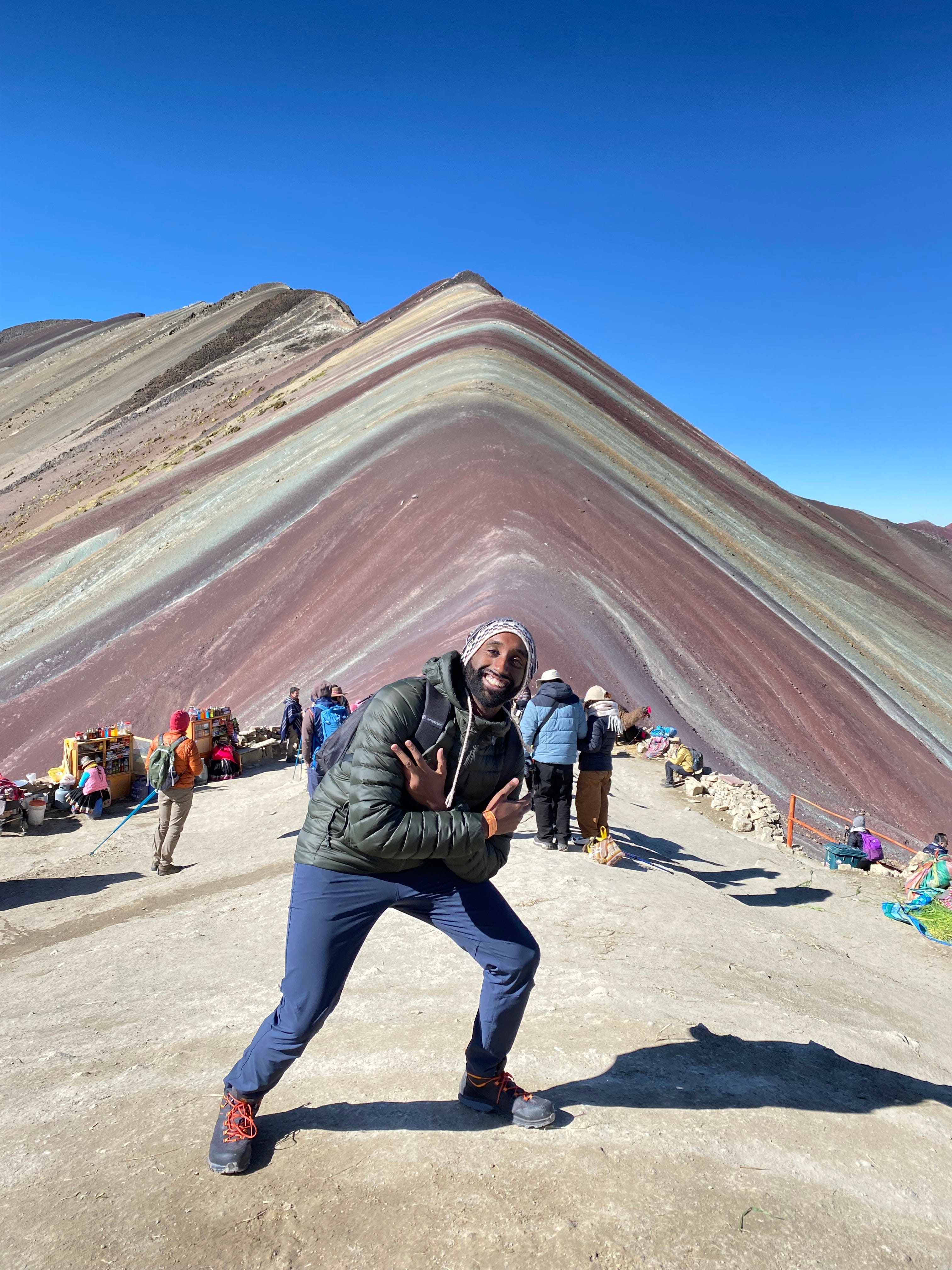
I remember the call I had with the VP when the first big tech layoffs hit in 2023. It was sudden. Afterward, I felt like I was floating in this liminal space, this weird void. In the days after, I took time to process it all. Eventually, I decided to book a transformative trip to Peru that would change my life.
I’ve been thinking lately of the ego, my ego, and how it directs me towards what I need and the hunger that I have to achieve my desires. My journey into psychedelics was to help me heal from my past perceptions of myself — the bad experiences that were rooted in the search for something more. Often, I feel like we tend to misunderstand the “ego” and its importance in achievement and in our sense of self. I think I did as well, not that I had a big ego, but I felt that it might be blocking me from connecting somehow.
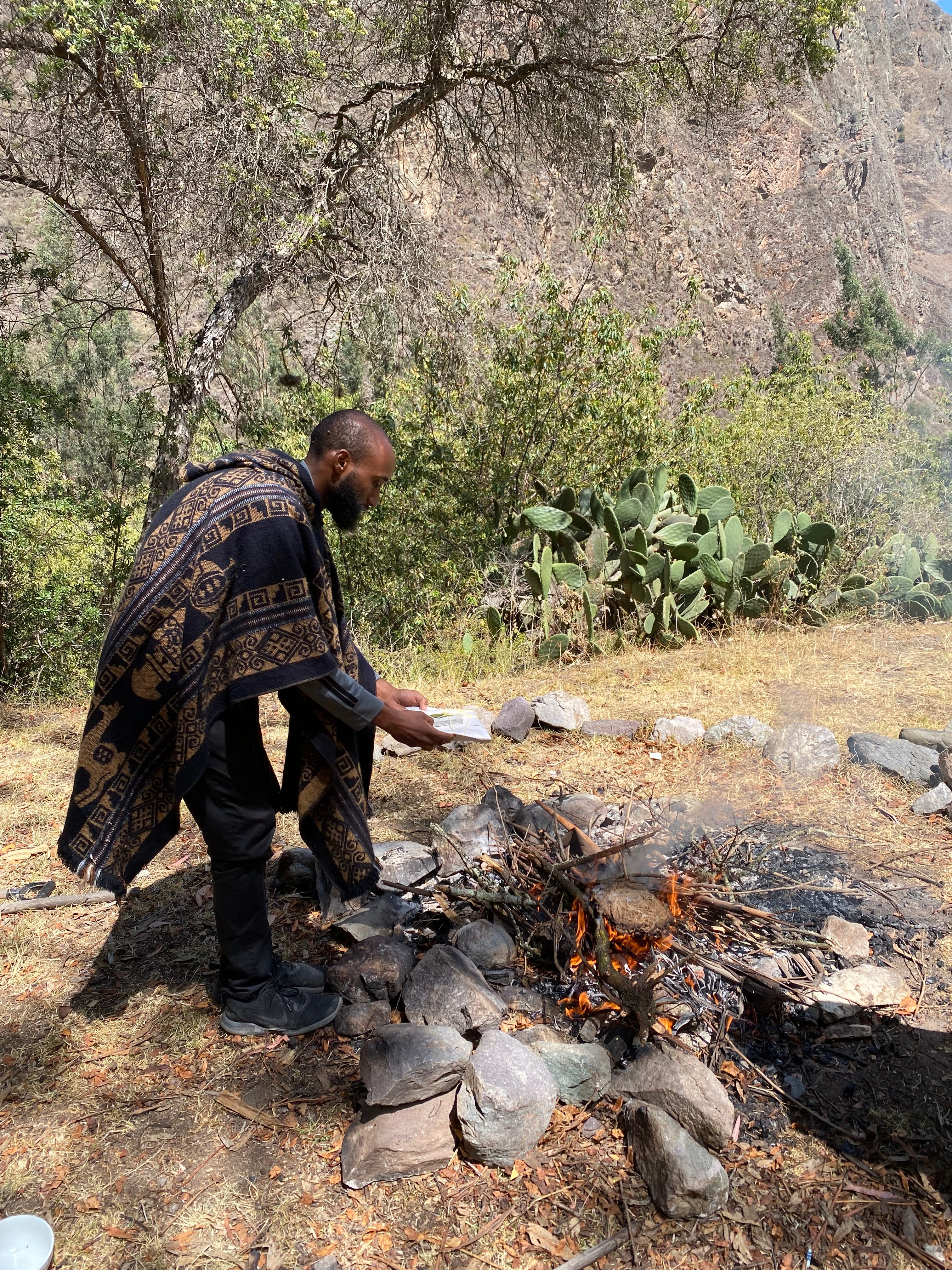
I spent a lot of time researching it and speaking with people about their experiences. Then I decided to do ayahuasca, referred to as the mother plant because of its healing, nurturing, and guiding nature. I was in a small town in the Sacred Valley called Ollantaytambo, where I did my ayahuasca ceremony with two funny, great shamans, one of whom was really into Hip Hop and was actually a rapper who performed and toured around Latin America, haha.
The experience is hard to describe. I remember being in what’s called a maloca, a traditional ancestral longhouse built by Indigenous peoples. That’s where the ceremony takes place. As I sat amazed by being in this space, I was thinking about what led me here. If you want to be successful, you need your ego, but here I was, trying to go through ego dissolution. As if that were the answer to my problems. I’m not the type of person who does things on a whim; I need to think things through meticulously. Maybe that was part of the problem; maybe what I needed was to understand being present in the moment.
The first night of the ceremony, I didn’t feel the effects. There was some blockage. The second night, they decided to give me more yes, it’s taken in a shot glass- go figure- and I knocked back what looked like mud water, with this earthy, awful taste, four times. Then the “purge” started, the cleansing process into the bucket they give you. This deep, bone-chilling feeling started to overtake my body, a sensation I’d never felt before or since. Slowly, I started to see things, the visions, and then I was like, ooh shit, this is crazy.
At some point, I was bugging out, again trying to control or make sense of what was happening, but that was impossible, like a rocket shot into outer space, I was gone. I was yelling in my decent Spanish and English, and the shamans were laughing because they were surprised at how good my Spanish had gotten. I had to breathe and really just go through it, flow, like they were telling me. That felt foreign — like, if I’m not in control, then who is? As men, we all feel this pull to be in control of many things, but that’s a kind of illusion, because the only thing we can truly control is our response and our effort, not anything else.
As I went through it and saw more visions, I felt the extreme range of human emotions: happiness, anger, confidence, lust. I saw blue and green lights and plant-like things everywhere, all around me, as if I’d been teleported into a different world. Then I saw people from the past relatives who’d transitioned- and others I’d never met before, ancestors, as if they were trying to tell me something. I felt this kinetic release from them to me. I felt this hunger to be great and to change things.
Then came the part people describe when they say you connect to the plant and let go: this overwhelming, euphoric sense of connectedness and love. My sense of self dissolved, like I’d merged into something larger. Surreal doesn’t quite cover it. After the time I spent there, I met some interesting people. I had planned to return shortly after the ceremony, but someone I met said, why not travel around Peru? So I changed my ticket and ended up traveling around the country for a month. What I took away from the experience was that although our ego may at times get in the way of many of our relationships, it is necessary and vital for us to thrive.
If we’re capable of taming our ego to help drive us toward our aims and goals, that’s important because a fragile ego, a fragile sense of self, won’t allow us to become who we’re supposed to be. The problem lies in being inflexible in our approach to this. I think many men these days are performing, not going deeper into the truth of who they are and what they actually want, because that requires a level of honesty and openness with themselves. I’ve caught myself doing exactly this. During my own job search, I’d sit across from an interviewer and stretch the truth about tools I hadn’t actually used and hands-on experience I didn’t really have, because in that moment, admitting the gap felt like too much exposure. It wasn’t really about the tools. It was about not wanting to be seen as anything less than finished, less than ready, when the truth was I was still figuring plenty of it out. That’s the performance most of us are running, in one form or another: projecting a finished version of ourselves because admitting the gap between the performance and the truth means admitting we don’t have it all figured out yet. That kind of honesty takes more than most of us are willing to risk.
When we’re not honest with ourselves, we get frustrated because we’re not getting what we need, and often there’s a level of incongruence that shows up in many areas of our lives, especially with women. A partner often notices the incongruence between the mask and the man before he does; intimacy has a way of surfacing what the rest of the world doesn’t see. In a relationship, the mask eventually wears off, one way or another.
I think if we’re grounded in our own truth, then what we want can meet us where we are. For me, that hunger for more is rooted in striving to be the best version of myself, outside of the social noise, expectations, or the narrow box in which I, or any of you, might be defined. When the ego is rooted in that, one doesn’t need to be constantly performing or trying to put someone down. I’d rather uplift people through words of affirmation, positivity and actions. Used well, the ego becomes fuel for a drive that comes from abundance instead of fear. Used poorly, it becomes a kind of scarcity, a need to take instead of build, and it costs you the people around you. We live in a culture that rewards the second version. It’s on us to choose the first.
Looking back now, I think about that call with the VP differently. At the time, it felt like the floor dropped out. These days I’d probably sit in that same void without rushing to fill it, trusting that the next chapter, whatever it is, doesn’t need to be controlled—just walked into.
