

I once dated a girl, who according to my standards at the time on paper was the ideal partner. She was physically attractive, smart, funny, ambitious and personally ambitious.
I met her at a time in my life where I felt the need to hit certain benchmarks in order to be deserving of.. well… anything. And in this period where everything I did was driven by my need to be seen and validated, I met this woman, and we fell for each other instantly. I don’t know why, but we seemed to spark something in each other, and what started as a small flicker, quickly burst into flame, and that flame grew until it reached a point that neither one of us knew how to stop. And unfortunately for me, only one of us wanted it to.
This is embarrassing to say, and I guess acknowledging that is owning up to the unfair expectations we have on men. But I think I was in an abusive relationship. Things started out amazing, we showered each other in compliments and grand acts of affection, did everything together, and invested in each other’s dreams and aspirations. But while that was happening, there would be moments that felt so contradictory to all of the good I was experiencing.
She would constantly pick at my attire. “Jokingly” telling me that I looked “broke” wondering out loud why I “couldn’t afford better things” when I would call her out on it she would feign confusion. When she wasn’t commenting on my attire, she was finding fault in the ways I treated people. She found my habit of speaking to strangers to be a sign of weakness, she would start arguments, and try to coax me to violence, when I didn’t give in, she would question my manhood. When I told her how this made me feel she accused me of being “emotional” and “sensitive.” No matter what happened in our relationship, even when the challenge was clearly something she caused, the fault would somehow lay at my feet, and it was my job to resolve it. If I didn’t, the consequences would be devastating and I would be left alone to hold that weight.
After a year of this chaotic and maddening relationship, I finally built up the courage to break up with her, and when I told her that I didn’t think we should see each other anymore, she was confused. According to her we had never been in a relationship, she was just being nice to me because I had a crush.
If you have been in an abusive relationship, you know how disorienting it can be, how the accumulation of gaslighting, redirecting, and blame shifting can make you lose sight of reality. Those who have never lived through this type of relationship may think that breaking up with that person is the victory, and from there you can move on. But in reality, it can take years to recover from the damage done in those relationships, and you may never get to a place where you can rediscover who you were, or the potential you once had.
Recovering from something like that can feel like trying to put out a forest fire with a single bucket during a drought. It takes a community to heal.
I think that’s why it’s so important for me to talk about abuse, and not just the different forms of it, but also the patterns of abuse that so many of us seem to miss, the values we deny in order to protect our favorite abusers or to justify our actions, and the contradictions that exist under all of it. The truth is, we live in a society that at times perpetuates abusive behavior, celebrates abusers, and ignores or silences survivors. Kind of like how we treat Black people. We exist in a world that gives us impossible conditions. The comparison is not perfect, but both survivors and Black people must navigate a world that seems to not know what to do with us. When we try to use our resources to improve the world around us, it can be perceived as selling out, but if we lean in, there are complications there as well. As we struggle to figure out the balance, the world picks at every action and reaction.
Earlier today, I read an article from New York Times Journalist, Nikole Hannah Jones. In this article she discusses the regret she feels for sending her daughter to a predominantly black school in a poor district. Her belief was that she and her husband could use their education, financial and social privilege to help raise the standard for the school and by extension, the other students there.
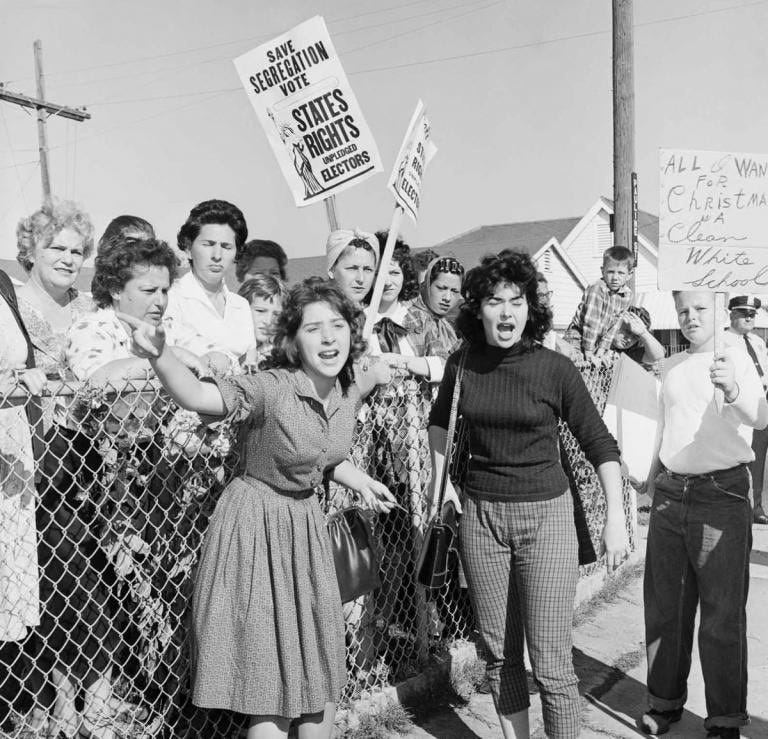
Ten years after making this bet she was forced to admit failure after being confronted by a 16-year old daughter who felt like her parents had senselessly set her up for failure. I have lots of personal thoughts on Nikole’s essay, but I would encourage you to read it and formulate your own opinion. What I would like to talk about is the choice she was facing. Nikole and her husband are raising their daughter in New York City, one of the most diverse and progressive places in the United States. It also has one of the most segregated school systems in the country.
If Nikole wanted to improve the chances of her daughter receiving a quality education, she would have likely needed to move her to a district where the majority of students were white, send her to a charter school, or do what thousands of upper middle and higher class white New Yorkers do, send her child to a private school. However, if she did that, she might have exposed her child to the unnecessary racial trauma that can come with going to majority white schools. She might have been more prepared for advanced algebra, but how much would that matter if she was experiencing racist attacks and discrimination?
Instead she opted for the public school, and while there were many well meaning people there, the structural obstacles that exist within our country’s educational system all showed up. Her daughter made it to high school but struggled academically and was not sufficiently prepared in some subjects. As a result she grew anxious before exams and felt resentment towards her parents for the choices they made on her behalf.
In the post, Nikole acknowledges where she fell short, despite this, people are jumping from every corner to dunk on her for these failures. But what many aren’t doing is engaging with the structural obstacles that force parents like Nikole and others into this situation. What folks should be asking is, do you really have a choice when the entire system is structured to lean towards failure?
And what about the other Black and brown children and their parents in those schools, the ones who don’t have parents that work at the New York Times, who don’t have money for a tutor or connections to people in high places, do we just forget about them? Nikole and her husband made some interesting choices, but should we be spending our time questioning her, or demanding the answer for why so many parents of Black and Brown children are forced into this position to begin with?
The most maddening part of this ordeal, besides some of NHJ’s own decisions, is what seems to be a complete dismissal of the real villain, structural racism and poverty. Both of these things, more than any education program or school funding choices, impacts the ability for children to learn. These are problems that if we really put our minds to, we could solve within this lifetime. Instead we single out individual actors for their mistakes, separate ourselves from the sick and hope it doesn’t reach us, and then when things come tumbling down, we exhibit shock as if we played no part in it. The entire ideal is disorienting, and it’s just one pillar holding up the black experience in America. A country that demands we put out fires we didn’t start, provides very little tools, and then chastises us as it all burns down.
Congratulations, you made it to the end. Let’s keep the conversation going. Consider answering one of these questions:
How much agency do we have when our choices are constrained by circumstances?
When does using privilege become complicity?
Why do we blame individuals for problems created by systems?