By Guest writer: Stefanos Ugbit Notes from The Man Cave
Thanks for being a subscriber to Let’s Not Be Trash. If you’re new here, we (Stanley Fritz, Evan J. Mastronardi, and Karina Maria ) write about patriarchy, politics, race, culture, music, and ruminations. The goal is to talk about important issues, in a way that is digestible and relatable. Because nobody wants to read a Ted Talk.
If you’re new, please consider subscribing, if you’re already on the list and have a few coins, consider upgrading to a paid subscriber. If you have commitment issues but want to contribute, you can buy me and my son (cat) food at Buy Me a Coffee
If you like my Substack and want to discover other great writers, check out this directory from Marc Typo, called The Cook-Out.
The nature of male friendships tends to be misunderstood by many people; it is both simple yet complex. A lot of male friendships stay on the surface level, but there are a lot of goodwill gestures and actions over words that convey what may need to be said.
What’s strange is how many of these friendships last forever without getting good. Long and superficial decades deep, inch wide. Or there’s talk of vulnerability, accountability, the deep life shit but it never lands. Longevity gets mistaken for closeness. You can know someone thirty years and still not know them, because duration was never depth.
It has an easygoing quality that’s usually refreshing and tends to stay right on the surface, because going deeper is something of a taboo. This sometimes causes friction around how things should or could be communicated, because the core issues tend not to be addressed. The lack of depth and substance in a lot of these conversations between men shows up in other areas of our lives’ romantic relationships, personal life, and even professional life at times.
The habit and practice it take to have these kinds of conversations become easier over time like working out a muscle, it takes repetition, consistency, and intentionality. This seems to be a lost art, because, in part, the way we’re socialized and how we view ourselves keeps us from having these “real” conversations that require us to show up fully embodied instead of fragmented. This doesn’t serve us individually, or the people we care about and come into contact with. In general, it is very hard to be truthful, especially in these times, when we all live in this social media world where our digital avatars and what Carl Jung calls the persona, the mask we wear seem to always be on us, performing a strength (boasting, playing the alpha) that keeps us fragmented from who we really are.
I, like everyone else, have flaws and blind spots I may not be aware of. I think the difference lies in how we take in information that may feel harsh because it’s truthful the truth can be jarring, and it is for most people. That level of raw honesty, if received well and given in a way that can be absorbed, can be transformative if we choose to act on it. The truth, regardless of how we feel about it, just is, and the way we perceive it says a lot about our current state, whether we choose to deal with it or not. Although, when you grow and evolve, your own mask falls off, and the dynamics of friendships seem to take a turn that’s more surprising than one would think.
That’s what happened: I started to be more truthful in ways that my friends didn’t respond well to. There are so many other people who tacitly stand by and allow bad behaviors to continue, saying things like, “that’s not my problem.” Although it isn’t my problem, it is someone’s issue for me, if I’m being honest, I find it hard not to say something, especially to people close to me. For one, I don’t want him looking like a fool and continuing the bad behavior, but another reason is that it kind of affects me too because, as they say, birds of a feather do flock together. I had a really close friend of over thirty years who was going through some mental health struggles, and I tried to help, but I realized that I couldn’t. I also came to the realization that, for my own mental health and future, I had to step away from that friendship. It’s kind of funny most men will be friends with each other no matter what, as if loyalty somehow means you just stick it out.
When one person starts to evolve, unlearn things, and wants to move higher toward the light, you have to choose yourself over the feeling of familiarity and nostalgia. As Jung points out, when you undergo the process of individuation and become more of your true self, you not only start changing but also change the dynamics of the relationships around you. People start projecting things onto you, and they can either be supportive and inspired by your growth, or not. There’s no in-between. Your growth sometimes feels threatening because it reminds people of what they’re not doing or should be doing.
I’ve returned to Kahlil Gibran’s “On Friendship” more times than I can count over the years the way he writes about a friend as “your field, which you sow with love and reap with thanksgiving,” about seeking a friend not to kill time but to live it. It’s a beautiful, almost sacred vision of what friendship can be. But it’s also, I’ve come to notice, a vision built for a kind of intimacy that doesn’t always come naturally to men the kind we’re taught to route around, or arrive at only sideways, through action instead of words. I wanted to write my own answer to Gibran not a rejection of his vision, but a truer picture of how it actually shows up between men, surface and depth both.
On Male Friendships
Beer, cheers watching the game, as time unfolds
Jumped up, shouted out foul, thoughts lost in the noise
Back and forth as arguing about that type of hold
Buzzer sounds, last shot, crazy with the boys
Spoke out his mind, something hard to find
Words, cut a slice of lime, as the tears climb
Verbal landmines, spiraled and unwind
Broken a taboo that’s old as time
Coffee brews, as the morning light shines through
Handing him a cup of joe
Carrying it all, mask cracks, shows something true
The silence deafening, as if time felt slow
If only therapy was a 4 letter word,
Norms, words, it all feels so absurd
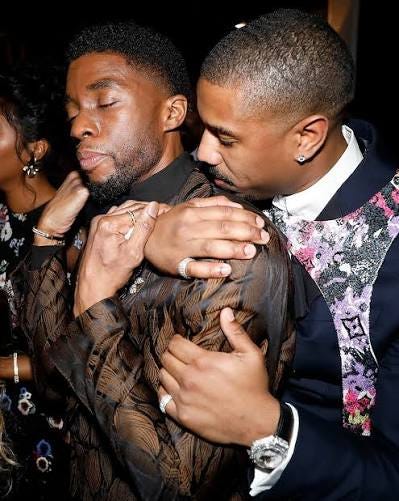
I feel freer having written this poem, as if everything fell into its rightful place.
As time passes, things become clearer. You grow older, you learn and unlearn things, and as you keep striving for something more, it transforms you and everything around you for the better but when you’re in it, it’s hard to see that sometimes. There’s always a lesson, and things move on; there’s always a new season. I learned that although most people say they want the truth, it’s really hard to digest. It’s better to let people learn through their own life experiences, even if you see them repeating the same patterns, because at the end of the day, I realized that you can’t really help someone who’s not willing to change.
All you can be, at most, is a guide or a bridge to a better place. Even as I write that, it sounds kind of arrogant like I have all the answers, like this is the best way and sometimes people hear advice that way no matter how well you phrase it. It doesn’t matter in the end; it’s best to keep striving and find others like you, who are seeking more truth from themselves and from life in general. I see why people tend to go into nature, hike, and garden it’s peaceful to be in solitude, and around people who are growing in a similar direction as you, who can accept things as they are, and who, despite hardships, will try to work through it.
https://substack.com/@notesfromthemancave
Shadow Work: Ugbit, Stefanos: 9789370926943: Amazon.com: Books