

In this country, our heroes are so pure it’s almost vulgar. Their stories drip of honor, their purpose is always clear, and their actions, no matter what they are, can be justified as something that had to be done for the greater good. Everyone celebrates when the Avengers defeat a villain, never mind that they had to level an entire city to do it. And as they move on to their next crusade, the people most affected by that destruction are never acknowledged; it’s as if they don’t exist. But this is the unsexy part of heroism; we don’t talk about it because it’s not relevant, and those obsessed with hero culture have likely never considered it. I know I didn’t.
When I was much younger, I dreamed of one day becoming a hero like the ones I always read about. I thirsted for the opportunity to make a difference. To face up against an unstoppable force of evil, and through my own power shut it down. I wanted to do this in a way that the entire world could see it, so that all eyes could solely be on me. During this period, I didn’t have many thoughts about villains, at least not the ones you would imagine. I saw them as nothing but foils placed in my path to flesh out my story. Any other opinions I had of them were shaped by my father and what I heard from others. What I took from both venues was that villains were at the root of everything wrong with humanity.
They were a cocktail of hatred, greed, envy, lust, and violence manifested into a single being. They hated this world, and they hate our way of life; it is that hatred that drives them to do unspeakable things. Through this painting of villainy, there was no reason to ever learn more about them. They deserved no understanding or empathy because they were not human, and even if every villain I had ever seen in real life was an actual human being, I was told in more ways than one that they had no humanity. That lack of humanity gave permission to do whatever it might take to defeat them, it also created permission for some to take pre-emptive measures aimed at “Stopping" villainry” before it even happened.
For a long time, this was fine. I lived happily within the comforts of this idea, and I celebrated as those in power set forth to destroy every villain possible with ruthless precision. But as I grew older, small cracks began to show up all over this unbreakable idea that once grounded me. And then one day, while sitting on the stoop of my building, I started asking a brand-new set of questions. For example, why were some parts of my city pristine and beautiful, while the area where I lived was not? Our roads were bumpy and full of potholes, we had uneven sidewalks that always seemed to be peppered with hundreds of empty crack vials, the home that I lived in was squeezed in between two abandoned buildings, one of those buildings had been partially burned down; and the police ostensibly there to protect us, treated everyone like wild animals that needed to be tamed.
I had done nothing wrong, nor had the people who lived in the community, but everything in our environment seemed to tell a different story about who we were and what we deserved. Before I knew it, I started asking more questions and began investigating my surroundings and the people in control of them. Television was the venue that spelled it out for me. One day, while watching the news with my father, I heard First Lady Hilary Clinton speak about the current state of crime in the U.S. In this discussion, I heard her use the term “Superpredator.” She used it to describe people from communities like mine, stating that we posed a threat to society.
I remember staring at the screen thinking angrily, “What did we do to you?” But her words were illuminating. And it wasn’t just Ms Clinton who viewed us this way; most of the country did as well, even some of our neighbors. Thankfully, for as much as I loved heroes and trusted the words of those in power, I knew in my heart that they were wrong about us. And since then, I have been suspicious, and sometimes outright hostile to the idea of heroes and villains. How could I not be? I have experienced firsthand how this narrative can be weaponized against others, how anyone can be labeled a threat at any time.
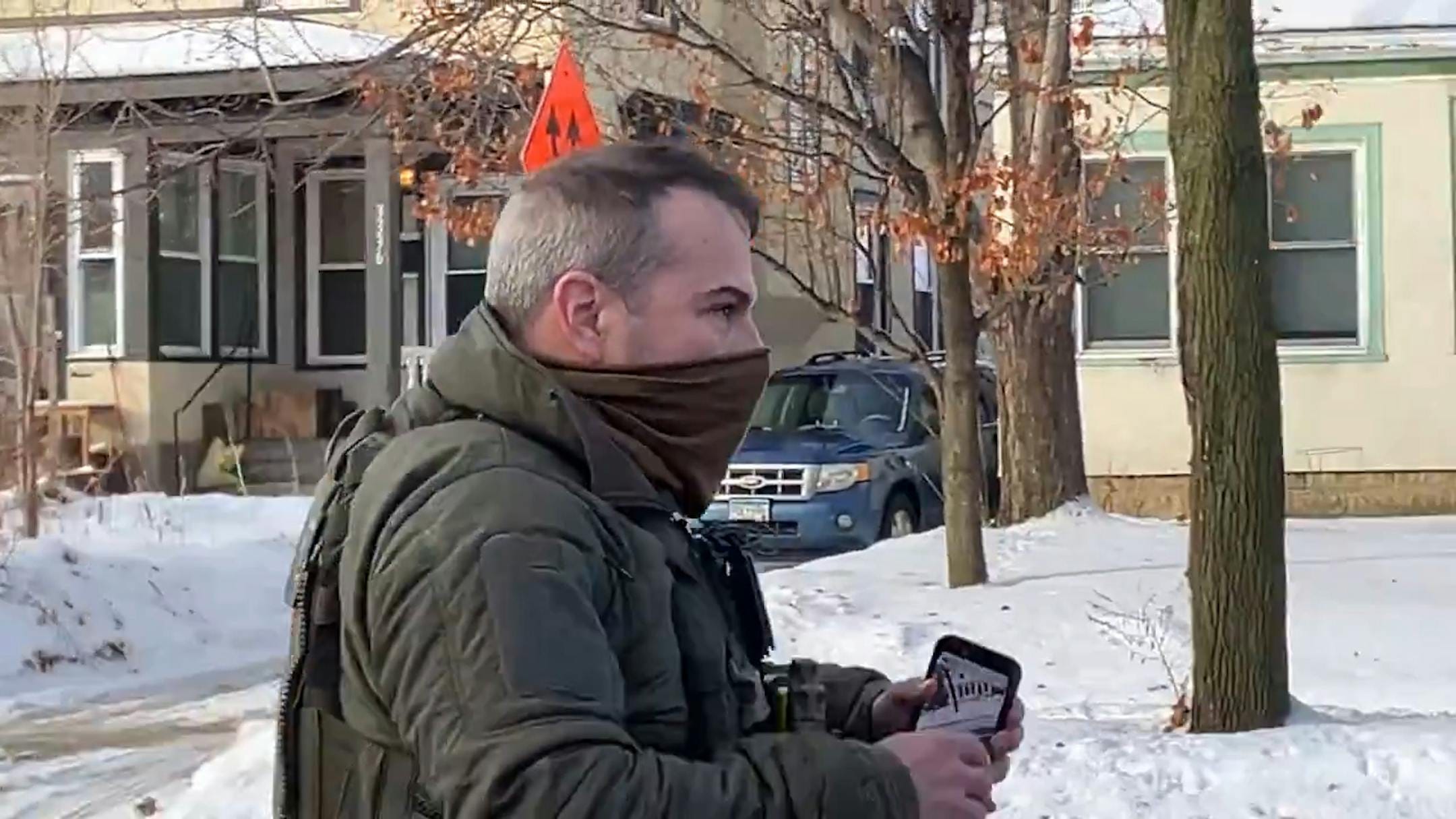
Unless you have spent some time in a group this country does not care for, it can be hard to understand what I am saying. But anyone can be made into a monster; you don’t even have to try that hard to find an example. Just look at what’s happening in Minnesota. Two weeks ago, Renee Good was shot and killed by an ICE agent in her own neighborhood. Her crime was being in the wrong place at the wrong time. Since her death, the Trump administration has accused her of being a “Domestic Terrorist,” then claimed that she tried to run over the ICE agent, despite there being video showing this did not happen. Since all of that failed, they are now investigating Renee Good’s partner.
Renee did not deserve to die, and the actions being taken by this country’s “leadership” aren’t just cruel and disgusting; it is also the way in which modern villains are made. It is the crafting of a one-sided narrative reinforced by those in power or by those too cowardly to push back against propaganda. They create false realities and then feed them to society as slop. They need us to believe these stories, to see the same villains they do, because the moment we break free of their hold, we might begin to see what is truly happening. I sometimes wonder what the younger version of myself would think about these current events. Would I smartly be able to see the lies coming from this administration, or would I, like millions of others, be celebrating the “valiant” efforts of ICE while justifying cold-blooded murder?
The biggest trick we have all fallen for is the idea of heroes and villains, and that these monsters in power are somehow our saviors. That the death, destruction, and hatred they aim to sow every day are necessary and just. And the unvarnished love of greed and bigotry fit perfectly into what it means to be a hero. I’m here to tell you it does not, and if, for some reason, I’m wrong, I would much rather be a villain anyway.
It’s really showing that no one is coming to save us really. We have to be our own heroes 🦸🏾♀️
Thank you for writing this, Stanley! I was in college in the early aughts and recall quite clearly failing an English 101 paper because the prompt was something like 'who is your hero and why' and I decided to challenge the prompt with the idea that only a broken society could have heroes because if we truly cared for one another no one would require saving... the professor's feedback was something about Susan G. Komen and her work on raising awareness around breast cancer and I felt like she answered my entire point.
Grateful to be on the receiving end of your words! If we are willing to vilify one another, we are in fact the villains.